
Blogs
Home
Commercial Basement Waterproofing & Pressure Grouting
Commercial Basement Waterproofing & Pressure Grouting
Admin
June 23, 2026
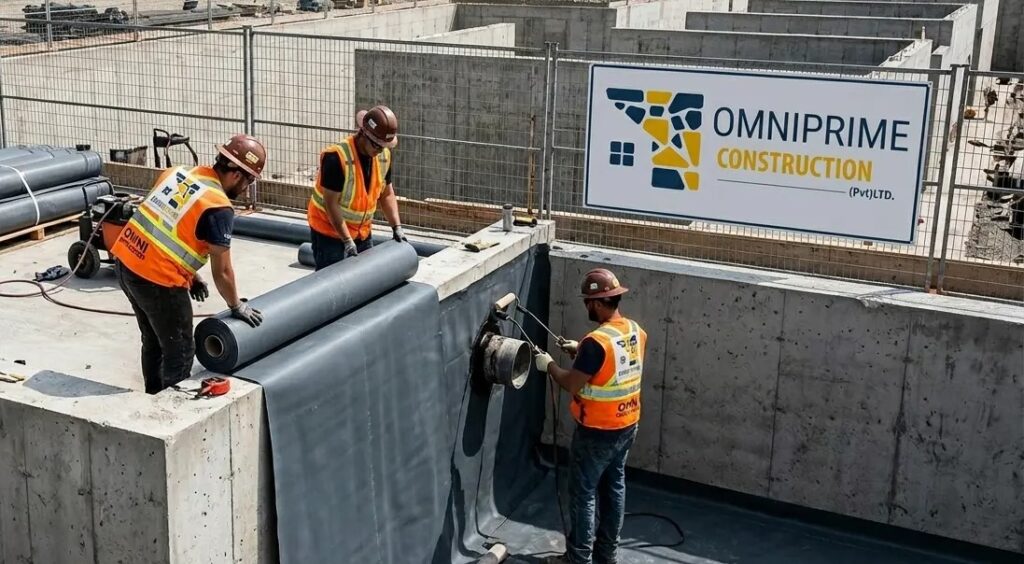
Underground concrete structures face a continuous, invisible adversary: hydrostatic pressure. Unlike exposed roofs or upper-level walls, commercial basements, subterranean parking structures, and underground water retention tanks are permanently surrounded by moisture-laden soil profiles.
When water tables rise following heavy regional rain cycles, groundwater exerts extreme physical pressure against the exterior foundation. If the initial construction lacked an exterior waterproofing membrane, or if that membrane has degraded over time, water inevitably breaches the structural envelope. This manifests as damp patches, mineral efflorescence, structural cracking, or active pooling leaks. To reclaim these critical commercial spaces and protect structural foundations, asset managers rely on specialized chemical applications involving Crystalline Barrier Systems and High-Pressure Polyurethane (PU) Injection Grouting.
1. Positive-Side vs. Negative-Side Waterproofing
In structural engineering, the orientation of your waterproofing barrier relative to the water source determines the application methodology:
💧 Positive-Side Waterproofing (Exterior Execution)
This involves applying elastomeric membranes or bituminous coatings directly to the exterior face of the foundation wall that contacts the soil. While highly effective, it is virtually impossible to execute on existing buildings because it requires extensive, costly excavation around the perimeter of the structure.
💧 Negative-Side Waterproofing (Interior Fix)
Applied directly to the interior concrete surfaces within the basement. This system is engineered to withstand the intense pressure pushing the coating off the wall. It represents the primary, cost-effective engineering approach for retrofitting and correcting active underground leaks without disturbing surrounding ground infrastructure.
2. High-Pressure Polyurethane (PU) Injection Grouting
When a foundation wall develops a structural fracture with active water gushing or seeping through, standard surface mortar patches will quickly wash away. The definitive engineering solution is high-pressure polyurethane injection grouting.
This technique utilizes advanced chemical resins injected directly into the core of the concrete crack profile. Upon contacting internal moisture, the liquid polyurethane undergoes a rapid chemical reaction, expanding up to **20 to 30 times its original volume**. It transforms into a dense, closed-cell flexible foam wrapper that drives out water and seals the structural void completely from the inside out.
🛠️ Hydrophobic vs. Hydrophilic Grout Resins
Engineers select the polymer based on the specific environmental conditions. Hydrophobic resins require minimal water to initiate expansion, remain highly stable over long periods, and are ideal for sealing isolated cracks subjected to fluctuating water tables. Hydrophilic resins actively absorb water during the expansion cycle, creating a tight rubberized seal, making them perfect for continuously water-logged structures or moving expansion joints.
3. Technical Specifications: System Comparison
Selecting the correct basement rehabilitation system depends heavily on whether you are dealing with structural cracks, surface dampness, or leaking cold construction joints:
| Application Method | Crystalline Surface Barrier | High-Pressure PU Grouting |
|---|---|---|
| Primary Purpose | Pore-sealing & capillary damp proofing | Sealing active water gushing cracks & cold joints |
| Pressure Resistance | Excellent against heavy negative hydrostatic load | Incredible, directly opposes high dynamic flow |
| Flexibility / Elasticity | None (Becomes part of the rigid concrete) | High (Accommodates ongoing structural shifts) |
| Execution Depth | Surface penetration (up to several inches) | Full-depth penetration through the entire wall slab |
4. Method Statement: Executing Pressure Injection Grouting
Because pressure grouting involves working with specialized chemical pumps reaching pressures up to **200 to 250 bar**, execution must follow a strict engineering sequence to prevent fracturing the concrete matrix:
- Crack Diagnostics & Cleaning: Technicians clear the crack line of surface contaminants, scale, and mineral buildup to clearly evaluate the path of the water breach.
- Port Drilling at 45-Degree Angles: Holes are drilled along the sides of the crack at a 45-degree angle. The spacing usually matches the thickness of the concrete slab. Crucially, the drill path must intersect the crack at exactly the midpoint of the wall depth.
- Packer Installation: Heavy-duty mechanical brass packer ports are inserted into the drilled holes and tightened down securely. These ports feature one-way ball valves that allow the chemical grout to enter under high pressure without back-flowing out.
- System Flushing & Injection: Water is initially pumped through the ports to clear out masonry dust and prep the crack environment. Next, liquid polyurethane chemical grout is injected under controlled pressure, starting from the lowest port and moving upward as the expanding resin visibly emerges from adjacent ports.
- Packer Removal & Defect Patching: Once the chemical grout achieves a full cure and water flow ceases entirely, the mechanical packers are safely sheared off. The drill entry holes are then filled and sealed flush using an advanced polymer-modified structural repair mortar.
Ready to Permanently Protect Your Structural Assets?
Don't allow monsoon moisture seepage, severe thermal stress, or concrete degradation to compromise your industrial, commercial, or residential investment. Contact OmniPrime’s engineering crew today for an expert site evaluation and a comprehensive technical proposal tailored to your project.