
CFRP Structural Strengthening in Pakistan: Uses, Benefits & Applications
Admin
October 25, 2026
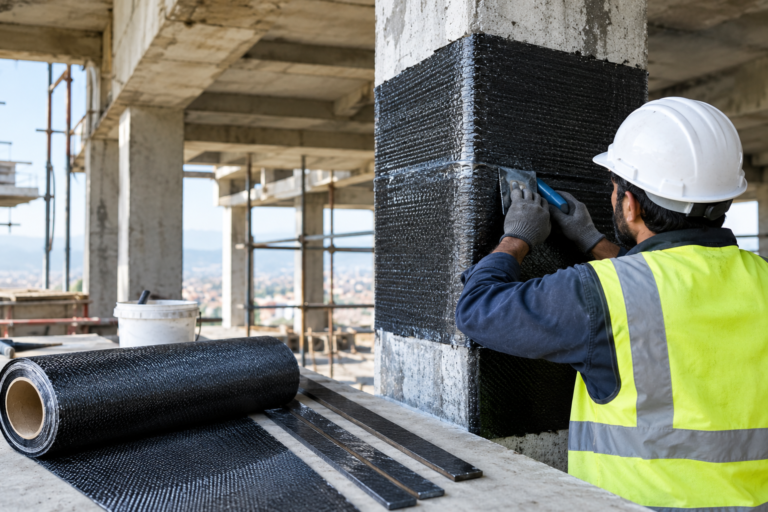
CFRP Structural Strengthening Systems are officially changing the face of construction and concrete repair across Pakistan. Imagine you are standing inside an old, historic commercial plaza in Lahore or a massive manufacturing plant in Karachi. The building looks grand, but under the surface, the concrete is tired. The columns are bearing more weight than they were ever designed to hold. Earthquakes, heavy machinery, or simply the passage of time have left hairline cracks snaking across the beams.
A few decades ago, fixing this meant massive structural disruptions. You had to bring in heavy steel jackets, break down walls, and shut down business operations for weeks. It was loud, ugly, and incredibly expensive.
But things have changed. Today, we have a silent, sleek, and incredibly strong carbon fiber reinforcement solution that feels almost like science fiction to traditional contractors.
Carbon Fiber Reinforced Polymer (CFRP) is an advanced composite material used to strengthen and reinforce existing structures. It combines high-strength carbon fibers with a polymer resin matrix to provide excellent tensile strength, low weight, and corrosion resistance. Depending on the selected system and structural design, CFRP strips and wraps can improve the load-carrying capacity of concrete beams, columns, slabs, and other structural elements.
Whether you are a structural engineer designing a seismic retrofit, a procurement manager looking to upgrade a factory floor, or a commercial property developer trying to preserve an asset, this guide is for you. Let’s look into how carbon fiber is changing the face of engineering and retrofitting across Pakistan.
What Exactly is a CFRP Structural Strengthening System?
Let’s break down the boring engineering talk into everyday language. CFRP stands for Carbon Fiber Reinforced Polymer.
Think of it as two teamwork elements:
The Carbon Fibers:
Millions of incredibly thin strands of carbon twisted together. On their own, they act like a flexible cloth.
The Epoxy Resin:
A high-strength structural glue that binds these fibers together and sticks them permanently to your building’s concrete.
When these two elements combine, they create a lightweight composite material with excellent tensile strength and a high strength-to-weight ratio. CFRP systems can strengthen existing concrete structures without adding significant weight or taking up much space. Unlike conventional steel reinforcement, carbon fibers do not rust, making CFRP a valuable option for structural strengthening in demanding environments.
The Two Pillars of Carbon Fiber Strengthening
When you work with a specialized contractor like OmniPrime Construction, we generally use two primary forms of this technology:
1. CFRP Wrap
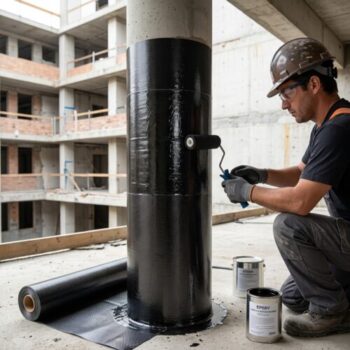
CFRP wraps use flexible carbon fiber fabric bonded to concrete with a compatible structural resin. They are commonly applied around columns to provide confinement and improve their behaviour under load. Depending on the structural design, CFRP fabrics can also be used to strengthen other concrete elements.
2. CFRP Strips (or Laminates)
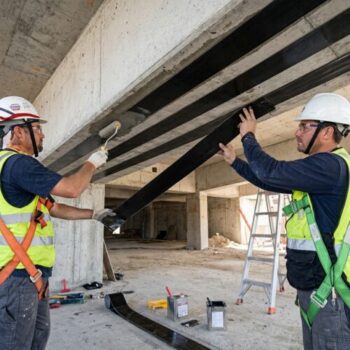
CFRP strips and laminates are typically pre-cured carbon fiber elements bonded to suitable concrete surfaces using a compatible structural adhesive. They are commonly used to improve the flexural capacity of beams and slabs when specified by a structural engineer. Proper surface
Why Pakistan’s Infrastructure Needs Carbon Fiber Retrofitting Right Now
Every country faces construction challenges, but Pakistan has a very specific set of structural headaches. From the intense heatwaves of Punjab to the earthquake risks in northern regions, our buildings take a beating.
Here is why local construction companies, government contractors, and property developers are moving away from traditional steel jacketing and choosing carbon fiber retrofitting:
1. Seismic Retrofitting Without the Bulky Look
CFRP systems can play an important role in seismic retrofitting when incorporated into an appropriate structural design. Depending on the building’s condition and strengthening requirements, CFRP wraps can help improve the confinement and deformation capacity of concrete columns, while other CFRP systems can strengthen selected structural elements. However, earthquake performance depends on the entire structural system, the building’s existing condition, and the design and installation of the strengthening solution. CFRP reinforcement alone cannot guarantee that a building will withstand an earthquake without damage or collapse.
2. Upgrading Load Capacity for Industrial Growth
CFRP strips and laminates can be used to strengthen suitable concrete slabs and improve their flexural capacity when required by the structural design. This solution can often be installed with less added weight and disruption than some conventional strengthening methods. The feasibility, installation duration, and time before the strengthened structure can be returned to service depend on the existing slab condition, the strengthening design, the selected CFRP system, and its curing requirements.
3. Fighting Corrosion and Structural Decay
In coastal areas such as Clifton, Karachi, moisture and airborne salts can contribute to corrosion of the steel reinforcement inside concrete structures. This corrosion can cause cracking, concrete deterioration, and reduced structural performance. CFRP materials offer excellent corrosion resistance and can strengthen suitable concrete elements without adding significant weight. However, CFRP does not automatically seal concrete or stop existing corrosion. Any underlying deterioration must be assessed and addressed, and the strengthening system must be designed and installed appropriately.
How Does it Compare? CFRP vs. Traditional Steel Jacketing
To make things easy to understand, let’s look at how advanced carbon fiber systems stack up against old-school steel plate bonding and concrete section enlargement.