
OmniPrime Construction

Blogs

CFRP Structural Strengthening in Pakistan: Uses, Benefits & Applications
Admin October 25, 2026
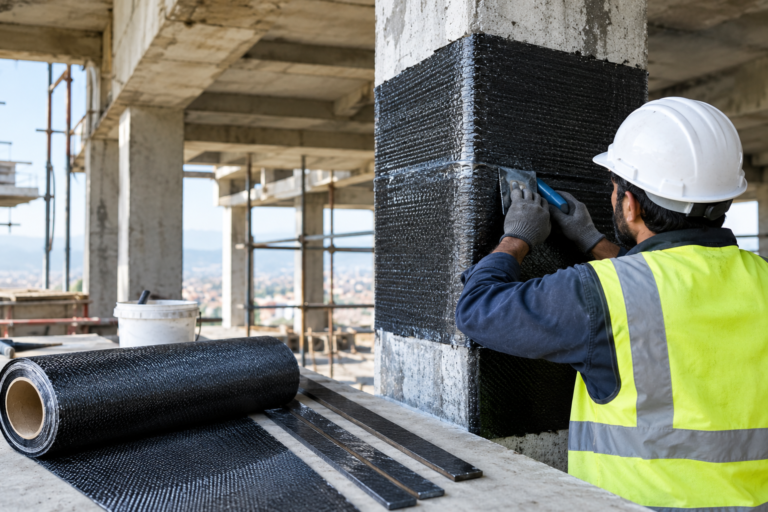
CFRP Structural Strengthening Systems
CFRP Structural Strengthening Systems are officially changing the face of construction and concrete repair across Pakistan. Imagine you are standing inside an old, historic commercial plaza in Lahore or a massive manufacturing plant in Karachi. The building looks grand, but under the surface, the concrete is tired. The columns are bearing more weight than they were ever designed to hold. Earthquakes, heavy machinery, or simply the passage of time have left hairline cracks snaking across the beams.
 
A few decades ago, fixing this meant massive structural disruptions. You had to bring in heavy steel jackets, break down walls, and shut down business operations for weeks. It was loud, ugly, and incredibly expensive.
 
But things have changed. Today, we have a silent, sleek, and incredibly strong carbon fiber reinforcement solution that feels almost like science fiction to traditional contractors.
 
Carbon Fiber Reinforced Polymer (CFRP) is an advanced composite material used to strengthen and reinforce existing structures. It combines high-strength carbon fibers with a polymer resin matrix to provide excellent tensile strength, low weight, and corrosion resistance. Depending on the selected system and structural design, CFRP strips and wraps can improve the load-carrying capacity of concrete beams, columns, slabs, and other structural elements.
 
Whether you are a structural engineer designing a seismic retrofit, a procurement manager looking to upgrade a factory floor, or a commercial property developer trying to preserve an asset, this guide is for you. Let’s look into how carbon fiber is changing the face of engineering and retrofitting across Pakistan.


What Exactly is a CFRP Structural Strengthening System?

Let’s break down the boring engineering talk into everyday language. CFRP stands for Carbon Fiber Reinforced Polymer.

Think of it as two teamwork elements:

The Carbon Fibers:

Millions of incredibly thin strands of carbon twisted together. On their own, they act like a flexible cloth.

The Epoxy Resin: 

A high-strength structural glue that binds these fibers together and sticks them permanently to your building’s concrete.

When these two elements combine, they create a lightweight composite material with excellent tensile strength and a high strength-to-weight ratio. CFRP systems can strengthen existing concrete structures without adding significant weight or taking up much space. Unlike conventional steel reinforcement, carbon fibers do not rust, making CFRP a valuable option for structural strengthening in demanding environments.

The Two Pillars of Carbon Fiber Strengthening

When you work with a specialized contractor like OmniPrime Construction, we generally use two primary forms of this technology:

1. CFRP Wrap

CFRP wraps use flexible carbon fiber fabric bonded to concrete with a compatible structural resin. They are commonly applied around columns to provide confinement and improve their behaviour under load. Depending on the structural design, CFRP fabrics can also be used to strengthen other concrete elements.
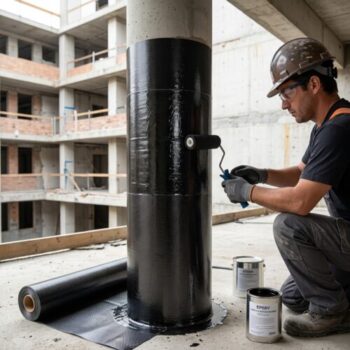
A construction worker applying structural epoxy resin over a black, textured CFRP wrap fabric wrapped around a concrete column at a commercial site.

2. CFRP Strips (or Laminates)

CFRP strips and laminates are typically pre-cured carbon fiber elements bonded to suitable concrete surfaces using a compatible structural adhesive. They are commonly used to improve the flexural capacity of beams and slabs when specified by a structural engineer. Proper surface
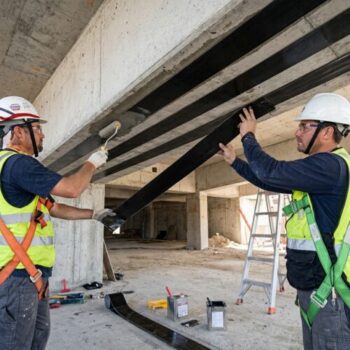
High-modulus CFRP strips bonded to the underside of a sagging industrial concrete slab floor using structural adhesive.

Why Pakistan’s Infrastructure Needs Carbon Fiber Retrofitting Right Now

Every country faces construction challenges, but Pakistan has a very specific set of structural headaches. From the intense heatwaves of Punjab to the earthquake risks in northern regions, our buildings take a beating.

Here is why local construction companies, government contractors, and property developers are moving away from traditional steel jacketing and choosing carbon fiber retrofitting:

1. Seismic Retrofitting Without the Bulky Look

CFRP systems can play an important role in seismic retrofitting when incorporated into an appropriate structural design. Depending on the building’s condition and strengthening requirements, CFRP wraps can help improve the confinement and deformation capacity of concrete columns, while other CFRP systems can strengthen selected structural elements. However, earthquake performance depends on the entire structural system, the building’s existing condition, and the design and installation of the strengthening solution. CFRP reinforcement alone cannot guarantee that a building will withstand an earthquake without damage or collapse.

2. Upgrading Load Capacity for Industrial Growth

CFRP strips and laminates can be used to strengthen suitable concrete slabs and improve their flexural capacity when required by the structural design. This solution can often be installed with less added weight and disruption than some conventional strengthening methods. The feasibility, installation duration, and time before the strengthened structure can be returned to service depend on the existing slab condition, the strengthening design, the selected CFRP system, and its curing requirements.

3. Fighting Corrosion and Structural Decay

In coastal areas such as Clifton, Karachi, moisture and airborne salts can contribute to corrosion of the steel reinforcement inside concrete structures. This corrosion can cause cracking, concrete deterioration, and reduced structural performance. CFRP materials offer excellent corrosion resistance and can strengthen suitable concrete elements without adding significant weight. However, CFRP does not automatically seal concrete or stop existing corrosion. Any underlying deterioration must be assessed and addressed, and the strengthening system must be designed and installed appropriately.

How Does it Compare? CFRP vs. Traditional Steel Jacketing

To make things easy to understand, let’s look at how advanced carbon fiber systems stack up against old-school steel plate bonding and concrete section enlargement.

Feature / BenefitCFRP Structural Strengthening SystemsTraditional Steel Jacketing
Material WeightExtremely lightweight; adds almost zero dead load to the building.Very heavy; requires cranes and adds massive structural weight.
Space PreservationMicro-thin profile (typically 1mm to 5mm thickness).Bulky; reduces clear room heights and column space.
Installation SpeedFast installation; no heavy machinery or loud drilling required.Slow; involves extensive drilling, anchoring, and welding.
Corrosion ResistanceExcellent corrosion resistance; durability under moisture and chemical exposure depends on the complete CFRP system and environmental conditions.High risk of rust; requires regular painting and maintenance.
Business DisruptionMinimal; the facility can usually stay open during application.Severe; high noise, dust, and extended downtime.

Step-by-Step: How CFRP is Installed Correctly

I always tell people that buying premium carbon fiber is only half the battle. The real magic lies in the installation. If the surface preparation is poor, the carbon fiber will simply peel off under load, wasting your investment.

Here is the exact, step-by-step process that the engineering teams at OmniPrime Construction follow to guarantee a permanent bond:

1
Surface Assessment & Repair
2
Mechanical Grinding & Profiling
3
Structural Epoxy Primer Application
4
Carbon Fiber Wet-Out & Installation
5
Quality Inspection & Protective Coating

1. Concrete Inspection and Crack Injections

Before installing a CFRP strengthening system, the concrete surface must be carefully inspected and properly prepared. Existing cracks should be assessed by a qualified structural engineer to determine their cause, severity, and appropriate repair method. Depending on the assessment, some cracks may require epoxy injection, while others may need different repair techniques or further structural investigation. Loose concrete, contaminants, and unsound surface material must be addressed to ensure suitable bonding between the CFRP system and the concrete substrate.

2. Surface Preparation (The Most Important Step!)

We use heavy-duty diamond grinders to remove old paint, plaster, or weak cement laitance. The concrete must be completely bare, clean, and slightly rough. Think of it like sanding a piece of wood before applying wood glue; a rough texture creates a much tighter grip.

3. Applying the Primer and Putty

We roll on a specialized structural epoxy primer that penetrates deep into the concrete pores. If the concrete surface is uneven, we apply an epoxy putty to smooth out any small pits or bumps. The carbon fiber needs a perfectly smooth run.

4. Fabric Wet-Out and Application

The carbon fiber wrap is saturated with structural resin. We carefully place the sticky fabric onto the concrete surface. Using a specific ribbed roller, we press down firmly to squeeze out any trapped air bubbles. This ensures every single carbon strand is perfectly bonded to the building.

5. Final Curing and Topcoat

After the CFRP system has cured in accordance with the manufacturer’s specifications, any required protective coating or finish should be selected based on the project’s environmental and performance requirements. Where fire resistance is required, a compatible fire-protection system must be designed and installed to meet the applicable fire-resistance criteria. Plaster, paint, and other finishes should only be applied when they are compatible with the CFRP system and the manufacturer’s recommendations. Proper protection helps maintain the performance and durability of the strengthening system.

Partner with Pakistan’s Specialized Structural Strengthening Experts

At the end of the day, your buildings are more than just concrete and steel. They are the factories driving our economy, the offices where our teams work, and the plazas that serve our communities. Protecting them requires a long-term engineering approach, not a cheap temporary patch.

At OmniPrime Construction (Pvt) Ltd, we take an engineering-focused approach to structural strengthening. From concrete surface preparation to the application of CFRP systems, our team works to deliver reliable strengthening solutions based on project requirements, appropriate material selection, and installation procedures. We aim to help clients improve the durability and structural performance of their buildings across Pakistan.

Are you dealing with structural cracks, preparing for a heavy machinery installation, or planning a seismic upgrade for your facility? Let’s talk about it.

Frequently Asked Questions (FAQs)

Expert engineering insights on Carbon Fiber structural reinforcement systems.

Q1: Is carbon fiber strengthening expensive compared to steel?
CFRP systems may have a higher initial material cost than some traditional strengthening methods. However, total project costs depend on material quantities, structural design, surface preparation, labour, installation time, and any required protective measures. In suitable projects, CFRP can reduce added structural weight and installation disruption. A project-specific assessment is necessary to compare the overall cost of CFRP and steel jacketing.
Q2: How long do CFRP structural strengthening systems last?
CFRP structural strengthening should be designed and installed by qualified professionals in accordance with applicable engineering standards and the requirements of the selected system. ACI 440.2R provides guidance on externally bonded FRP systems for strengthening concrete structures. However, the appropriate design must also consider the existing structure's condition, loading requirements, concrete substrate quality, environmental exposure, and installation procedures. A qualified structural engineer should assess each project to determine the most suitable strengthening solution.
Q3: Can carbon fiber withstand fire?
Carbon fibers can withstand high temperatures, but the epoxy resin used in many CFRP systems can soften or lose its bonding properties when exposed to elevated temperatures. This can affect the strengthening system's performance during a fire. Where fire resistance is required, a compatible fire-protection system should be selected and installed to meet the project's applicable fire-safety requirements. The appropriate protection method depends on the CFRP system, building use, and required fire-resistance rating.
Q4: Can I use CFRP on materials other than concrete?
Yes, certain CFRP systems can be used to strengthen materials other than concrete, including masonry, structural steel, and timber. However, the appropriate system, bonding method, surface preparation, and design requirements differ depending on the substrate. Applications involving historic stone or masonry structures may also require special assessment to preserve the existing material. A qualified structural engineer should evaluate the structure and confirm the suitability of the selected CFRP system before installation.
Q5: What is the typical curing time required before the system is fully active?
CFRP curing times vary by product formulation, temperature, and site conditions. Initial curing, readiness for loading, and full curing are different stages. The manufacturer's technical data sheet specifies the required curing period and the conditions under which the strengthened structure can safely return to service.
Q6: Does a building require extensive surface preparation before wrapping?
Existing cracks must be assessed by a qualified structural engineer to determine their cause and the appropriate repair method. Depending on the assessment, some cracks may require epoxy injection, while others may need different repairs or further investigation.
Q7: Is it possible to inspect the concrete underneath after the carbon fiber is cured?
Once a concrete member is wrapped with a CFRP system, the covered surface cannot be inspected visually. However, suitable inspection methods can help assess the condition of the strengthening system. Depending on the project requirements, these may include visual checks of accessible areas, tap testing for potential debonding, and appropriate non-destructive testing methods selected by a qualified engineer. Ultrasonic testing and infrared thermography may also be useful in suitable conditions, but their effectiveness depends on the system, the defect being investigated, and the testing procedure. No single method can guarantee that the CFRP-to-concrete bond is completely sound.
Q8: Can CFRP systems be applied during extreme hot summer weather in Pakistan?
CFRP installation during Pakistan's hot summers requires careful control of site conditions and material handling. High temperatures can affect the working time, viscosity, and curing behaviour of epoxy resins. The suitable application temperature depends on the selected CFRP system and its manufacturer's technical specifications. Proper planning, temperature monitoring, and adherence to installation guidelines help ensure reliable bonding and long-term performance.

Ready to Permanently Protect Your Structural Assets?

Give your building the ultimate durability, load capacity, and resilience it demands. Contact OmniPrime Construction today for expert structural strengthening guidance, a comprehensive engineering assessment, and a customized proposal tailored to your specific requirements and budget.