
Blogs
Home
Industrial Epoxy & Polyurethane Flooring in Pakistan
Industrial Epoxy & Polyurethane Flooring in Pakistan
Admin
October 18, 2026
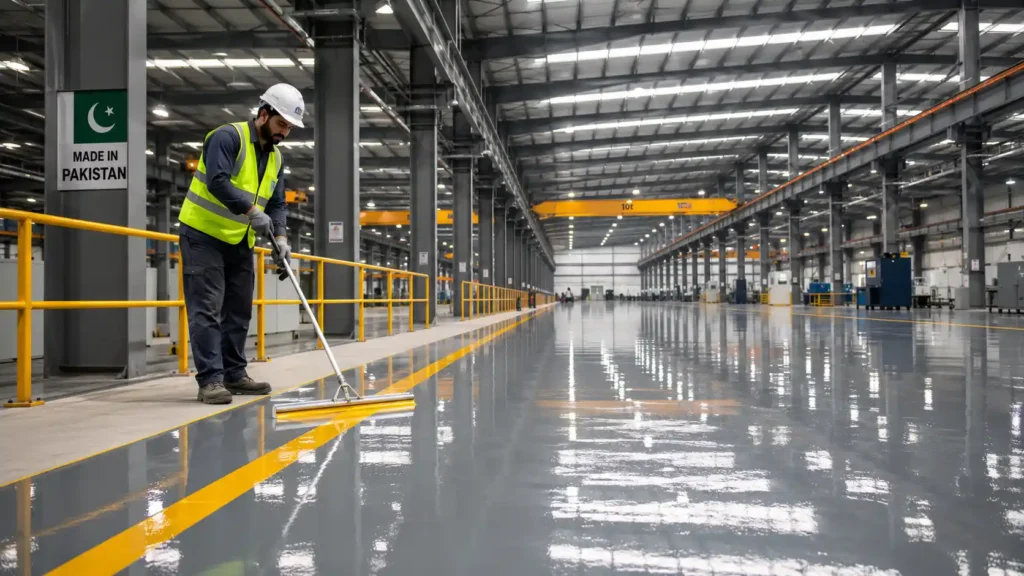
In a rapidly growing industrial sector, the floor of a manufacturing plant, pharmaceutical facility, or commercial warehouse is more than just a surface—it is a critical operational asset. Across Pakistan, from the heavy-duty manufacturing plants in Punjab to the bustling units in the Hayatabad Industrial Estate in Peshawar, standard concrete floors are failing under modern operational pressures.
Untreated concrete floors inevitably suffer from “dusting,” chemical degradation, absorption of hazardous oils, and structural cracking under heavy forklift traffic. To meet strict international regulatory standards and maintain seamless supply chain operations, modern facility managers are shifting away from traditional floor paints and tiles. The definitive engineering solution is the application of high-performance Industrial Epoxy and Polyurethane (PU) Flooring.
1. Epoxy vs. Polyurethane (PU): Choosing the Right Chemical System
While both resinous systems offer seamless, hygienic protection, they are engineered for distinct industrial environments. Selecting the wrong compound can lead to premature floor failure, delamination, or heavy financial loss.
⚡ Self-Leveling Epoxy Flooring Systems
Epoxy resins cure into a highly rigid, dense plastic matrix with incredible compressive and tensile strength. This system is exceptionally well-suited for heavy logistics warehouses, manufacturing bays, and electronic showrooms. It provides unmatched resistance to static heavy loads, impacts, and abrasive mechanical wear.
Epoxy resins cure into a highly rigid, dense plastic matrix with incredible compressive and tensile strength. This system is exceptionally well-suited for heavy logistics warehouses, manufacturing bays, and electronic showrooms. It provides unmatched resistance to static heavy loads, impacts, and abrasive mechanical wear.
⚡ Polyurethane (PU) Screeds & Coatings
Polyurethane formulations inherently possess higher elastomeric flexibility. This elasticity allows them to handle thermal shock exceptionally well, such as in cold storage facilities or commercial food kitchens where extreme temperature fluctuations occur. PU flooring also features premium resistance against corrosive organic acids, harsh chemicals, and direct impacts.
Polyurethane formulations inherently possess higher elastomeric flexibility. This elasticity allows them to handle thermal shock exceptionally well, such as in cold storage facilities or commercial food kitchens where extreme temperature fluctuations occur. PU flooring also features premium resistance against corrosive organic acids, harsh chemicals, and direct impacts.
2. Why Resin Flooring is Essential for Pakistani Industries
Implementing a multi-layer polymer floor system delivers substantial structural, economic, and regulatory benefits:
🛡️ Total Dust Suppression & Structural Shielding
As heavy machinery moving parts and industrial traffic operate across raw concrete, the surface slowly breaks apart, releasing micro-fine concrete dust into the air. This dust damages sensitive machinery components and ruins product batches. Epoxy coatings seal the concrete entirely, halting surface breakdown and extending the operational life of your infrastructure.
🛡️ Meeting Strict Compliance Standards (ISO, HACCP, WHO)
For pharmaceutical plants, laboratory settings, and food processing facilities in Pakistan, maintaining a bacteria-free environment is non-negotiable. Traditional tiled floors contain grout lines where microbes and moisture collect. A seamless resin coating completely eliminates seams, creating an easily sanitizable, impermeable barrier that satisfies international regulatory compliance audits.
🛡️ Chemical & Spill Resistance
In commercial textile mills, chemical processing units, and automotive workshops, floors are regularly exposed to aggressive solvents, hydraulic fluids, acids, and alkaline detergents. Epoxy flooring systems prevent these chemicals from eating into the concrete slab and polluting the underlying soil layers.
3. Technical Specifications: System Comparison
To ensure proper procurement planning, engineers look at the mechanical properties of each flooring type based on application requirements:
| Performance Property | Epoxy Flooring System | Polyurethane (PU) System |
|---|---|---|
| Flexibility / Elasticity | Low (Highly Rigid) | High (Impact Absorbing) |
| Thermal Shock Limits | Up to 60°C | Up to 120°C (Steam Cleanable) |
| Curing Profile Duration | 5 to 7 Days for full chemical cure | Rapid cure formulations available (1-2 Days) |
| Best Ideal Application | Warehouses, Engineering, Electronics | Food Processing, Pharma, Cold Storage |
4. The Critical Importance of Substrate Preparation
Over 90% of all industrial resin flooring failures occur because of poor surface preparation. Simply pouring resin over an oily, contaminated, or dusty concrete base will inevitably cause air bubbles, blistering, and early delamination.
A professional chemical application requires an exact technical execution sequence:
- Mechanical Grinding / Shot Blasting: Diamond grinders scour away the weak outer cement slurry layer (laitance), transforming the glossy concrete base into a rough profile that ensures permanent polymer adhesion.
- Decontaminating & Patching: Built-up grease deposits, deep engine oils, and chemical spills are chemically extracted, while expansion joints and baseline cracks are repaired using heavy-duty epoxy mortars.
- Moisture Vapor Measurement: Technical crews test internal concrete moisture percentages. If moisture values climb past 4%, a specialized epoxy damp-proof membrane primer must be laid down to hold back hydrostatic pressure.
- System Primer & Top-Coat Layering: The penetrative primer coat is laid, followed safely by the self-leveling base coats, and capped off with durable anti-slip or high-gloss UV protective top-coats.
Ready to Permanently Protect Your Structural Assets?
Don't allow monsoon moisture seepage, severe thermal stress, or concrete degradation to compromise your industrial, commercial, or residential investment. Contact OmniPrime’s engineering crew today for an expert site evaluation and a comprehensive technical proposal tailored to your project.